
Our Three Step Process
December 24, 2025
Biological Neurons vs Deep Learning Neurons: A Technical Perspective
Our Three Step Process
December 24, 2025
Biological Neurons vs Deep Learning Neurons: A Technical Perspective
Deep learning neurons are not copies of biological neurons, but functional abstractions inspired by them. Understanding this analogy allows learners to move from memorization to conceptual clarity, which is essential for mastering AI and machine learning.
Deep learning architectures are fundamentally inspired by the information-processing behavior of biological neurons. While artificial neurons do not replicate biological mechanisms, they abstract the signal aggregation, thresholding, and propagation principles observed in human neural systems.
This article presents a technical comparison between biological neurons and deep learning neurons, focusing on structure, computation, and learning behavior.
1. Biological Neuron: Functional Overview
A biological neuron operates as a signal-processing unit within a distributed neural network.
Core components:
Dendrites
Receive electrochemical signals from presynaptic neurons.Soma (cell body)
Integrates incoming signals through spatial and temporal summation.Axon
Propagates the action potential once the membrane threshold is exceeded.Axon terminals
Transmit neurotransmitters across synapses to downstream neurons.
Key property:
A neuron fires an action potential only when the aggregated input exceeds a critical membrane potential threshold.
2. Artificial Neuron (Perceptron): Mathematical Model
An artificial neuron abstracts this behavior into a mathematical formulation.
Given an input vector
x=[x1,x2,…,xn]
and weight vector
w=[w1,w2,…,wn]
The neuron computes:
Linear transformation:
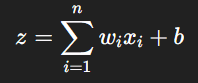
where:
wi represents synaptic strength
b represents the activation bias
Non-linear activation:

The activation function f(⋅) determines the neuron’s output.
3. Structural Correspondence
Biological Component | Deep Learning Equivalent |
|---|---|
Dendrites | Input features |
Synaptic efficacy | Trainable weights |
Soma integration | Weighted sum + bias |
Firing threshold | Activation function |
Axon signal | Output value |
This mapping enables artificial networks to approximate decision-making behavior observed in biological systems.
4. Role of Activation Functions
Without activation functions, neural networks reduce to linear models regardless of depth.
Common activation functions:
ReLU
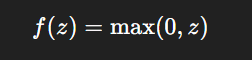
Enables sparse activation and efficient gradient propagation.
Sigmoid
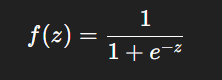
Commonly used for probabilistic outputs.
Tanh
Zero-centered non-linearity improving gradient symmetry.
Activation functions allow neural networks to model non-linear decision boundaries, which are essential for real-world tasks.
5. Learning Mechanism: Biological vs Artificial
Biological neurons:
Learning occurs through synaptic plasticity
Governed by biochemical processes (e.g., Hebbian learning)
Artificial neurons:
Learning occurs via error minimization
Weights updated using gradient descent and backpropagation
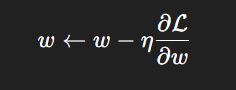
where:
L is the loss function
η is the learning rate
6. Scaling to Deep Neural Networks
A single neuron has limited representational power.
Stacking neurons into layers enables hierarchical feature learning:
Early layers → low-level features (edges, frequencies)
Middle layers → abstract patterns
Deep layers → semantic representations
This layered structure explains the success of deep learning in:
computer vision
speech recognition
natural language processing
autonomous systems
7. Key Limitations of the Analog
While useful, the analogy has limits:
Biological neurons operate asynchronously; artificial neurons are synchronous
Human learning is data-efficient; DL models are data-hungry
Brains adapt structurally; neural networks adapt parametrically
Thus, deep learning is biologically inspired, not biologically accurate.
Conclusion
Deep learning neurons are simplified computational abstractions of biological neurons. Their strength lies not in biological realism but in scalable mathematical optimization.
Understanding this abstraction helps practitioners:
design better architectures
select appropriate activation functions
reason about learning dynamics
At scale, intelligence emerges not from individual neurons but from coordinated computation across networks.


Deep learning neurons are not copies of biological neurons, but functional abstractions inspired by them. Understanding this analogy allows learners to move from memorization to conceptual clarity, which is essential for mastering AI and machine learning.
Deep learning architectures are fundamentally inspired by the information-processing behavior of biological neurons. While artificial neurons do not replicate biological mechanisms, they abstract the signal aggregation, thresholding, and propagation principles observed in human neural systems.
This article presents a technical comparison between biological neurons and deep learning neurons, focusing on structure, computation, and learning behavior.
1. Biological Neuron: Functional Overview
A biological neuron operates as a signal-processing unit within a distributed neural network.
Core components:
Dendrites
Receive electrochemical signals from presynaptic neurons.Soma (cell body)
Integrates incoming signals through spatial and temporal summation.Axon
Propagates the action potential once the membrane threshold is exceeded.Axon terminals
Transmit neurotransmitters across synapses to downstream neurons.
Key property:
A neuron fires an action potential only when the aggregated input exceeds a critical membrane potential threshold.
2. Artificial Neuron (Perceptron): Mathematical Model
An artificial neuron abstracts this behavior into a mathematical formulation.
Given an input vector
x=[x1,x2,…,xn]
and weight vector
w=[w1,w2,…,wn]
The neuron computes:
Linear transformation:
where:
wi represents synaptic strength
b represents the activation bias
Non-linear activation:
The activation function f(⋅) determines the neuron’s output.
3. Structural Correspondence
Biological Component | Deep Learning Equivalent |
|---|---|
Dendrites | Input features |
Synaptic efficacy | Trainable weights |
Soma integration | Weighted sum + bias |
Firing threshold | Activation function |
Axon signal | Output value |
This mapping enables artificial networks to approximate decision-making behavior observed in biological systems.
4. Role of Activation Functions
Without activation functions, neural networks reduce to linear models regardless of depth.
Common activation functions:
ReLU
Enables sparse activation and efficient gradient propagation.
Sigmoid
Commonly used for probabilistic outputs.
Tanh
Zero-centered non-linearity improving gradient symmetry.
Activation functions allow neural networks to model non-linear decision boundaries, which are essential for real-world tasks.
5. Learning Mechanism: Biological vs Artificial
Biological neurons:
Learning occurs through synaptic plasticity
Governed by biochemical processes (e.g., Hebbian learning)
Artificial neurons:
Learning occurs via error minimization
Weights updated using gradient descent and backpropagation
where:
L is the loss function
η is the learning rate
6. Scaling to Deep Neural Networks
A single neuron has limited representational power.
Stacking neurons into layers enables hierarchical feature learning:
Early layers → low-level features (edges, frequencies)
Middle layers → abstract patterns
Deep layers → semantic representations
This layered structure explains the success of deep learning in:
computer vision
speech recognition
natural language processing
autonomous systems
7. Key Limitations of the Analog
While useful, the analogy has limits:
Biological neurons operate asynchronously; artificial neurons are synchronous
Human learning is data-efficient; DL models are data-hungry
Brains adapt structurally; neural networks adapt parametrically
Thus, deep learning is biologically inspired, not biologically accurate.
Conclusion
Deep learning neurons are simplified computational abstractions of biological neurons. Their strength lies not in biological realism but in scalable mathematical optimization.
Understanding this abstraction helps practitioners:
design better architectures
select appropriate activation functions
reason about learning dynamics
At scale, intelligence emerges not from individual neurons but from coordinated computation across networks.
Other Blogs
Other Blogs
Check our other project Blogs with useful insight and information for your businesses


Other Blogs
Other Blogs
Check our other project Blogs with useful insight and information for your businesses